Key Takeaways:
- Integration of smart roofing systems enables real-time monitoring and predictive maintenance for proactive problem-solving.
- Drone technology enhances both safety and accuracy in roof inspections, drastically reducing risks to human inspectors while improving documentation for insurance claims.
- Advanced materials and coatings improve durability and energy efficiency by mitigating the effects of severe weather and reducing heat absorption.
- Automation and robotics streamline installation and maintenance processes, reducing human error and increasing consistency across large projects.
- Building Information Modeling (BIM) facilitates better project planning and management by creating a collaborative digital workspace for all stakeholders.
The landscape of commercial roofing is evolving rapidly as cutting-edge technologies redefine industry standards. Over the past decade, the pace of innovation in the roofing industry has accelerated significantly, driven by investments in research and rising expectations from building owners. These advancements facilitate safer work sites, enhanced energy efficiency, reduced expenses, and more sustainable outcomes for building owners. With modern roof systems, businesses are finding new ways to protect their investments, reduce long-term operational costs, and adapt to stricter building codes and environmental regulations. As the world moves toward green building practices, commercial roofing companies are stepping up to offer smarter solutions that go beyond traditional repairs and replacements.
Today’s commercial roofing sector leverages digital connectivity, robotics, and state-of-the-art materials to deliver better performance and durability. For example, advanced communication tools connect project managers, contractors, and facility owners in real time, enabling swift decision-making even for complex issues. Whether for new construction or upgrading existing structures, these improvements address both contractor and client priorities, balancing cost-effectiveness with safety and environmental stewardship. As companies seek to maximize uptime and minimize disruptions, adopting innovative processes quickly becomes a competitive advantage in the marketplace.
Among the notable trends, smart monitoring tools and data-driven solutions are taking operational efficiency to new heights. With the integration of cloud-based analytics, building owners can now compare performance data over time, identifying subtle problems before they escalate into major repairs. Companies adopting these approaches not only reduce repair costs but also improve safety protocols during inspections and installations—key concerns for facilities managers and building owners alike. As insurance providers recognize the added value of these technologies, some have introduced incentives for properties that use proactive roof management solutions.
For large-scale facilities and factories, these technological advancements have also paved the way for smarter industrial roofing solutions that meet the heightened demands of specialized industries and larger rooftop footprints. Whether handling the roofing needs of large warehouses or manufacturing plants, advanced commercial roofing technologies offer customizable options to meet complex requirements such as chemical resistance, solar integration, or extreme load-bearing performance.
Smart Roofing Systems: Real-Time Monitoring and Maintenance
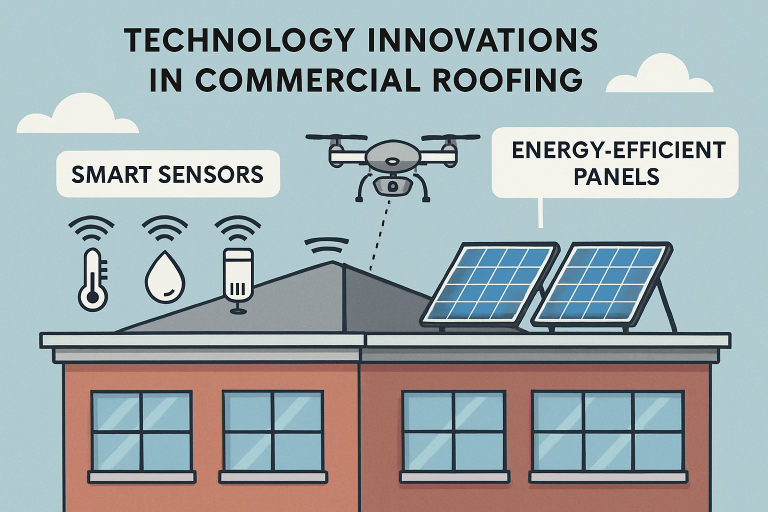
Smart roofing systems harness a network of sensors connected through the Internet of Things (IoT) to deliver real-time data on critical roof conditions—such as temperature, humidity, movement, or even early signs of leaks. These interconnected sensors can alert facility managers to subtle shifts or imbalances that may indicate water ingress or structural stress, enabling interventions well before problems become visible. Building owners and facility managers can act on this data instantly to perform predictive maintenance, reducing emergency repair incidents and minimizing property loss from undetected leaks. According to the U.S. Department of Energy, predictive and remotely managed systems can significantly extend roof lifespans while lowering routine maintenance costs. Over time, such systems generate large datasets that can reveal trends, informing future building strategies and more accurately budgeting for maintenance needs.
Drone Technology: Enhancing Inspection Safety and Accuracy
Drones equipped with high-resolution cameras, lidar, and thermal imaging sensors are transforming how roofs are evaluated for damage or wear. Instead of sending inspectors onto potentially hazardous surfaces, companies now use drones to quickly and thoroughly scan vast rooftop areas. The ability to perform comprehensive inspections remotely not only speeds up project timelines—especially for large or hazardous rooftops—but also drastically reduces risks to human inspectors. Photogrammetry and 3D mapping capabilities further allow contractors to deliver more detailed reports to clients, ensuring nothing is overlooked during insurance assessments or regular maintenance checks. By capturing precise images and measurements, drones can also monitor ongoing projects for quality control, providing stakeholders with visual progress updates that can be shared instantly, even across long distances.
Advanced Materials and Coatings: Boosting Durability and Energy Efficiency
Material science breakthroughs are introducing highly resilient products to the market. Modern synthetic membranes can withstand extreme weather and chemical exposure, making them ideal for challenging environments. Reflective or “cool roof” membranes, for example, help business owners cut summer cooling costs by reflecting sunlight rather than absorbing it, as detailed by the U.S. Department of Energy. These solutions not only lower utility bills but also ease the load on HVAC systems, prolonging their lifespan. Meanwhile, self-healing coatings and sealants use chemical reactions triggered by exposure to the elements to automatically patch small punctures or abrasions, reducing manual labor requirements and increasing the roof’s service life. Some advanced coatings even offer enhanced fire resistance or antimicrobial properties, adding another layer of protection for commercial facilities.
Automation and Robotics: Streamlining Installation and Maintenance
Automation is making inroads on commercial rooftops, where robotic systems can handle repetitive and heavy-lifting duties previously performed by crews. Robotic cutters, adhesive applicators, and membrane fasteners all work in tandem to deliver precision and efficiency. From cutting and fastening membranes to applying adhesive and securing fasteners, robotic solutions boost installation accuracy, minimize errors, and free up skilled labor for more demanding aspects of the job. This not only increases job-site safety but also helps meet tight deadlines for large-scale commercial and industrial projects. As robotics technology continues to advance, expect these systems to automate even more functions, reducing production backlogs and allowing roofing companies to serve more clients without sacrificing quality.
Building Information Modeling (BIM): Facilitating Project Planning
BIM transforms how roofing projects are planned, visualized, and executed. By generating a digital “twin” of a building, BIM allows stakeholders to collaborate more effectively, optimize material orders, reduce waste, and anticipate possible conflicts with other building systems. This model-centric approach is particularly beneficial for retrofits and renovations, as it provides insight into load-bearing capacities, roof penetration locations, and compatibility with green infrastructure, such as solar panels or vegetative roofing systems. BIM also improves communication between architects, engineers, and contractors, making it easier to coordinate complex schedules and minimize on-site disruptions.
Conclusion
The commercial roofing industry stands at the forefront of technological transformation. Advancements spanning smart monitoring, drone inspections, innovative materials, and digital workflow tools like BIM are creating safer, smarter, and more sustainable roofing outcomes. As facility owners and property managers stay informed about these trends, they position themselves to benefit from higher-performing, longer-lasting, and more cost-effective roof systems for years to come. Those who embrace these innovations today will enjoy improved asset protection, lower risk, and a strong competitive edge in an ever-evolving marketplace.
