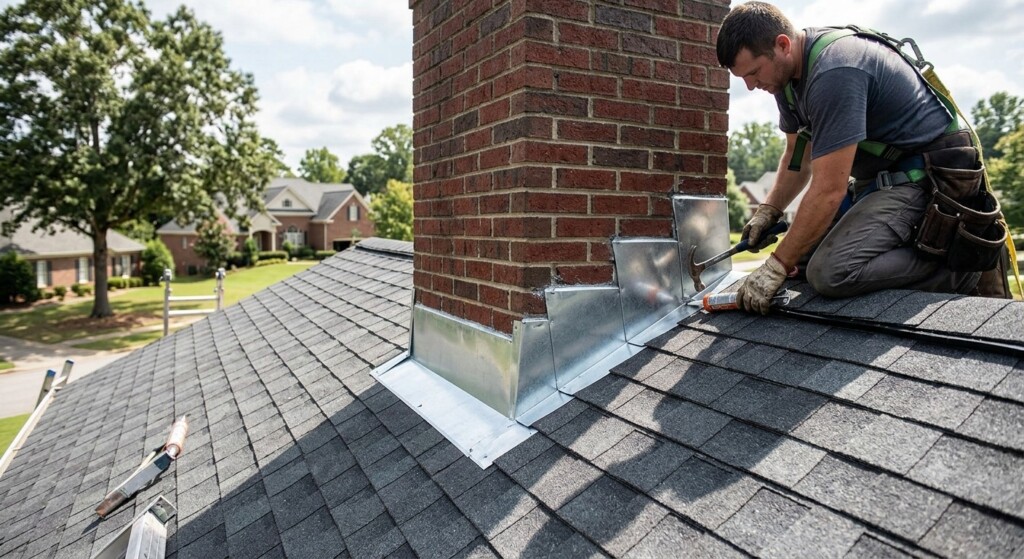
Hidden beneath shingles and roof transitions, flashing performs one of the most important jobs on a roofing system. Water rarely enters through large open gaps; instead, it finds tiny weaknesses around walls, pipes, valleys, and penetrations. Proper flashing replacement leaves visible clues that trained eyes can spot immediately, making it easier for homeowners to recognize quality workmanship from experienced roof contractors.
Deeply Embedded Counter-Flashing Reglets Sealed with High-Grade Polyurethane
Along masonry chimneys and brick walls, quality counter-flashing should appear securely inserted into a clean reglet cut rather than merely attached to the surface. Deep embedment helps prevent water from slipping behind the flashing assembly during heavy rainfall and seasonal weather changes.
Unlike surface-mounted alternatives, professionally installed reglets create a stronger waterproof connection that remains stable for years. Careful roof contractors in Trussville AL often finish these installations with premium polyurethane sealants because they maintain flexibility and adhesion better than many standard roofing sealants.
Uniform Step-Flashing Overlaps Perfectly Integrated with the Shingle Course
Where sloped roofs intersect vertical walls, step flashing creates a layered drainage system that directs water safely downward. Proper installation reveals evenly spaced flashing sections woven neatly between each shingle course without visible distortion or inconsistent alignment.
Across the finished roof surface, uniformity becomes one of the easiest signs of skilled workmanship. Reputable roof companies in Trussville AL understand that properly integrated step flashing protects vulnerable wall intersections while preserving the clean appearance homeowners expect from a finished roofing project.
Double-Capped Valley Flashing Intersections Eliminating Capillary Action
Roof valleys handle enormous volumes of runoff during storms. Well-executed valley flashing installations often feature double-capped intersections designed to reduce capillary action, a phenomenon where water can travel upward between closely spaced materials. Within these critical drainage channels, clean metal transitions and consistent overlap patterns demonstrate attention to detail. Experienced roof contractors know that valleys receive concentrated water flow, making proper flashing design essential for long-term roof protection.
Mechanically Fastened Kick-Out Flashing Diverting Hydrostatic Pressure
Roof-to-wall transitions frequently suffer damage when kick-out flashing is missing or improperly installed. Correctly positioned kick-out flashing creates a clear pathway that sends water directly into the gutter system instead of allowing runoff to saturate siding or wall assemblies. Beneath successful installations, mechanical fastening provides stability that adhesive-only methods often cannot achieve. Trusted roof companies near me frequently emphasize kick-out flashing because it plays a major role in preventing hidden moisture problems near roof edges and wall intersections.
Seamless EPDM Pipe Boot Collars Compression-Fitted with Stainless Bands
Plumbing vent penetrations represent common leak locations on aging roofs. Modern EPDM pipe boot systems create a watertight seal around vent stacks while accommodating movement caused by temperature fluctuations throughout the year.
Around properly replaced pipe penetrations, homeowners can often see stainless compression bands securing the collar tightly against the pipe surface. Reliable roof contractors in Trussville AL understand that durable materials help extend the lifespan of these frequently exposed roofing components.
Ice and Water Shield Underlayment Membrane Visible Past the Drip Edge
One subtle but valuable visual indicator appears at roof edges where portions of the ice and water shield membrane extend beyond the drip edge during installation. This detail demonstrates that additional moisture protection exists beneath the visible roofing materials. Along vulnerable perimeter zones, secondary waterproofing layers provide extra defense against wind-driven rain and ice-related infiltration. Homeowners searching for roofing near me may overlook this hidden protection, yet it often contributes significantly to long-term roof performance.
Non-Corrosive Aluminum Apron Flashing Flawlessly Lapped Over Tile or Shingle
Apron flashing protects areas where roof surfaces meet vertical structures such as chimneys and dormers. Quality installations display smooth transitions with properly lapped metal sections that direct water onto the roofing surface rather than underneath it.
Across finished assemblies, aluminum flashing should lie flat without warping, buckling, or irregular gaps. Professional roof contractors recognize that proper overlap geometry remains just as important as the flashing material itself.
Blind-Fastened Wall Junction Profiles with Zero Exposed Neoprene Washers
Exposed fasteners often become future maintenance concerns because washers can deteriorate after years of weather exposure. Blind-fastened wall junction profiles eliminate many of those vulnerabilities by concealing attachment points behind protective metal assemblies.
Finally, clean wall transitions featuring hidden fastening systems often signal higher-quality craftsmanship. Yellow Hammer helps property owners evaluate flashing performance, roofing condition, gutter installation needs, and overall roof health through professional inspections and roofing services designed to identify the details that truly protect a home from water intrusion.
