Introduction
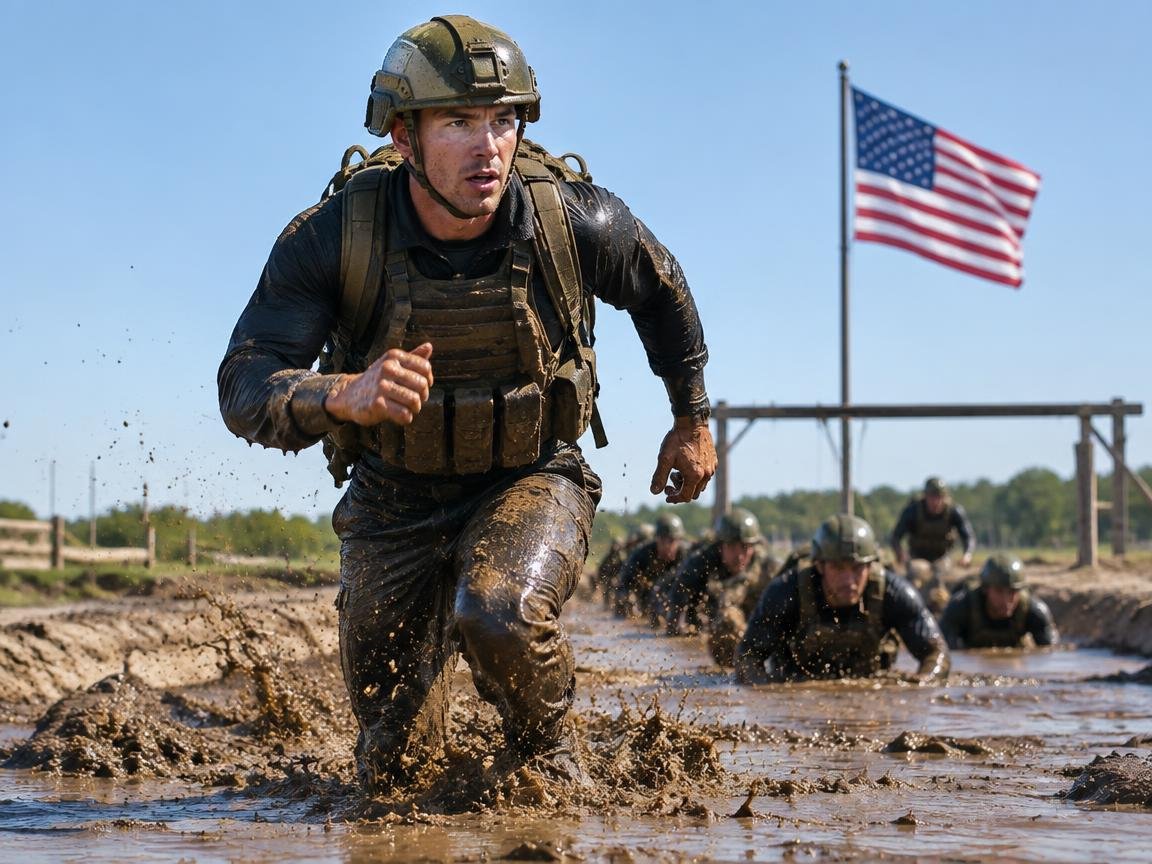
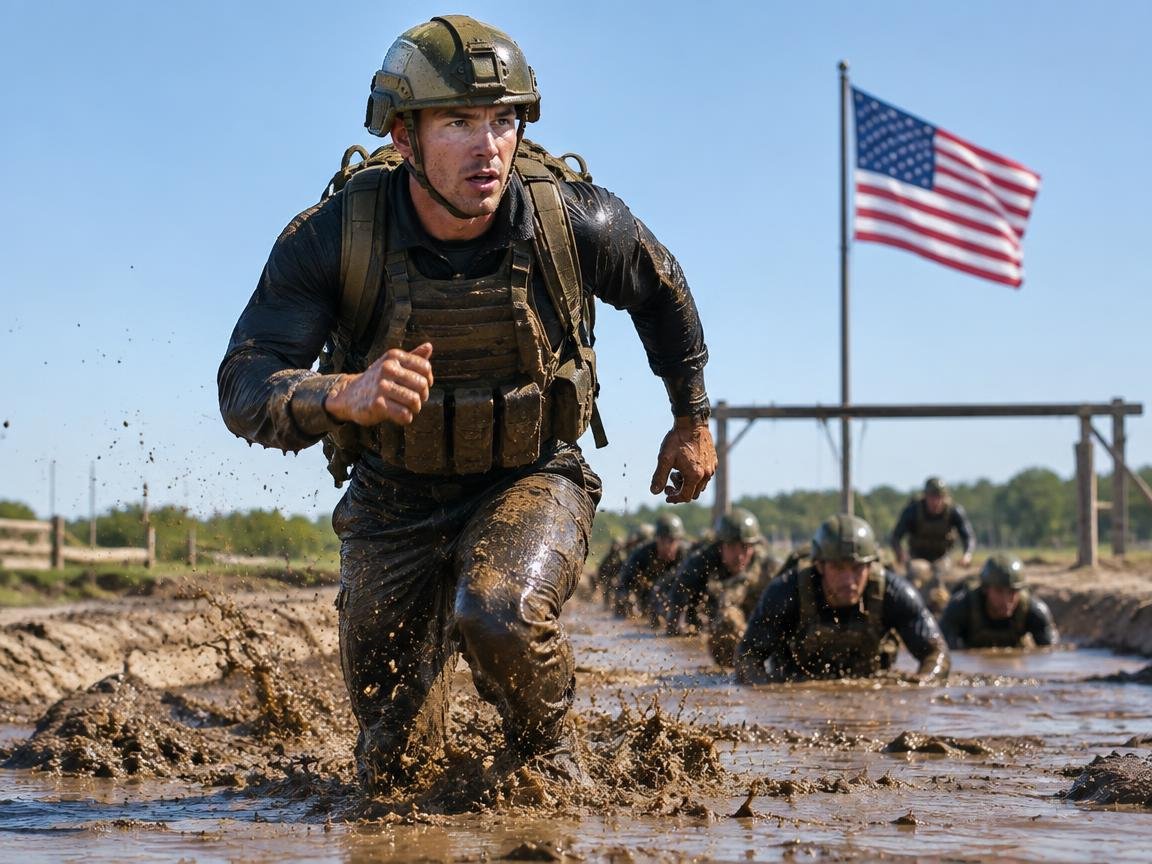
Becoming a Navy SEAL represents the pinnacle of military special operations. It demands extraordinary physical prowess, unwavering mental resilience, and strict adherence to specific eligibility criteria. For many, this elite path is a challenging yet deeply rewarding aspiration.
Understanding these precise requirements is the foundational step for any aspiring candidate. This guide aims to demystify the rigorous journey, providing a clear roadmap of what it takes to join the ranks of America’s most elite maritime special operations force.
We will explore everything from the initial age and educational prerequisites to the demanding physical fitness standards and intricate training pipeline. Our goal is to equip you with the essential knowledge needed to prepare for and successfully navigate the Navy SEAL selection process. For those looking for even more in-depth information and comprehensive resources for military members as they consider their career options, we encourage you to explore all available guides.
Core Eligibility Criteria and Specialized Entry Requirements

Embarking on the journey to become a Navy SEAL begins long before any physical test. Potential candidates must first satisfy a stringent set of core eligibility criteria, covering everything from citizenship and age to physical health and moral character. These foundational requirements ensure that only the most suitable individuals are considered for a role demanding such immense responsibility and sacrifice.
First and foremost, all applicants must be United States citizens. This is a non-negotiable prerequisite, reflecting the sensitive nature of the missions SEALs undertake. Age is another critical factor, with the general requirement for applicants falling between 17 and 28 years old. However, the Navy does offer some flexibility, with waivers potentially available for highly qualified candidates aged 29 and 30. For those with prior enlisted service as SEALs who aspire to become officers, age waivers can extend up to 33, acknowledging their invaluable experience.
Physical health standards are incredibly rigorous, particularly concerning vision. Candidates must have vision that is correctable to 20/25. While corrected vision is acceptable, there are also uncorrected standards: at least 20/70 in the worst eye and 20/40 in the best. Crucially, color blindness is an automatic disqualifier, as accurate color perception is vital for mission success, especially in identifying targets, reading maps, and handling equipment. Beyond vision, a comprehensive medical examination ensures candidates are free from any conditions that could impede their performance in extreme environments.
A clean background and impeccable moral character are equally important. All candidates must be able to obtain a Secret security clearance, which involves a thorough Tier 3 background investigation. This investigation delves into an applicant’s financial history, criminal record, and personal associations to assess trustworthiness and reliability. Any felonies involving drugs, weapons, violence, or sexual offenses are disqualifying. The Navy maintains a strict drug policy, and any recent history of drug abuse will lead to immediate disqualification. These measures are in place to ensure that every SEAL candidate possesses the integrity and discretion essential for handling classified information and operating in high-stakes situations.
Enlisted vs. Officer Standards for Elite Service
The path to becoming a Navy SEAL differs slightly depending on whether an individual pursues an enlisted or commissioned officer track. While both paths lead to the same demanding training and ultimate qualification, the entry requirements, particularly concerning education and testing, are distinct.
For enlisted personnel, a high school diploma or its equivalent is the minimum educational requirement. The Armed Services Vocational Aptitude Battery (ASVAB) plays a crucial role in determining eligibility. Candidates must achieve specific line scores to qualify for the Special Warfare Operator (SO) rating. The primary ASVAB score requirement is a General Science (GS) + Mechanical Comprehension (MC) + Electronics Information (EI) composite score of 170. Alternatively, a Verbal Expression (VE) + Mathematics Knowledge (MK) + Mechanical Comprehension (MC) + Coding Speed (CS) composite score of 220 is also accepted. Additionally, applicants must score VE + Arithmetic Reasoning (AR) = 110, with a minimum MC = 50. While the Navy requires a minimum Armed Forces Qualification Test (AFQT) score of 35 for general enlistment, men who successfully complete BUD/S traditionally boast AFQT scores of 78 or better, highlighting the high academic aptitude often seen in successful candidates. Waivers for ASVAB scores are rare and typically only considered for exceptional circumstances.
Officer candidates, on the other hand, are required to possess a baccalaureate degree from a regionally accredited institution. Their journey often involves attending Officer Candidate School (OCS) before entering the SEAL pipeline. The selection process for officers is even more competitive, involving several layers of evaluation beyond academic and physical prowess. This includes the SEAL Officer Assessment Course (SOAC), a rigorous multi-day evaluation that assesses leadership potential, problem-solving skills, and mental fortitude under stress. Candidates are evaluated on Honor and Integrity, Leadership, Physical Fitness, Communication Skills, Commitment, Academic Performance, Conduct, and Peer Evaluations. Following SOAC, the SEAL Officer Selection Panel (SOSP) makes the final selection decisions, scrutinizing each candidate’s comprehensive application package.
The table below provides a concise comparison of the key requirements for enlisted and officer candidates.
Criteria Enlisted Candidates Commissioned Officer Candidates Education High School Diploma/GED Baccalaureate Degree from accredited institution Age Limits 17-28 (waivers for 29-30) 17-28 (waivers for 29-30, up to 33 for prior SEALs) ASVAB/AFQT GS+MC+EI=170 OR VE+MK+MC+CS=220; VE+AR=110 (MC=50); AFQT 35+ (successful often 78+) Not directly applicable (college degree prerequisite) Selection Process PST, ASVAB, background check, medical OCS, PST, SOAC, SOSP, comprehensive officer package Administrative Recruit Training Officer Candidate School (OCS) Understanding Age Limits, Vision Standards, and Clearances
Delving deeper into specific eligibility criteria, the nuances of age limits, vision standards, and security clearances are paramount for aspiring SEALs.
As of October 2026, the standard age range for Navy SEAL applicants remains 17 to 28 years old. This range is carefully chosen to ensure candidates possess both the physical maturity and the mental adaptability required for the intense training and operational demands. However, the Navy recognizes that exceptional individuals may fall outside this primary window. As mentioned, waivers are available for highly qualified candidates who are 29 or 30 years old. These waivers are not granted lightly and typically require a candidate to demonstrate superior physical performance, academic achievement, and leadership potential that significantly exceeds the minimum standards. Furthermore, for men who have previously served as enlisted SEALs and wish to commission as officers, waivers can be extended up to age 33, valuing their invaluable operational experience and proven capabilities within the community.
Vision requirements are equally precise. Uncorrected vision must be at least 20/70 in the worst eye and 20/40 in the best eye. After correction, vision must be 20/25 in both eyes. This allows for individuals who rely on corrective lenses to serve, provided their uncorrected vision still meets the baseline. However, color blindness is an absolute disqualifier. This strict rule is due to the critical importance of color differentiation in various operational scenarios, such as identifying wiring, reading maps with color-coded terrain, and distinguishing signals or targets in complex environments. Laser eye surgery, such as LASIK or PRK, may be permissible, but candidates must meet specific post-operative stability and recovery periods.
Finally, the requirement for a Secret security clearance is non-negotiable. This involves a comprehensive background screening, often referred to as a Tier 3 investigation. This process scrutinizes an applicant’s entire history, including educational records, employment history, financial stability, foreign contacts, and any criminal record. The goal is to verify trustworthiness, loyalty, and reliability. Candidates must demonstrate impeccable moral character, meaning no history of serious criminal offenses, particularly felonies involving drugs, weapons, violence, or sexual misconduct. Even minor infractions can be scrutinized, and a pattern of poor judgment or disregard for rules can be disqualifying. The Navy’s drug policy is zero-tolerance, and any evidence of recent illegal drug use will prevent entry into the program. These stringent checks are fundamental to protecting national security and ensuring the integrity of the SEAL teams.
Physical Fitness Standards and the Assessment Pipeline
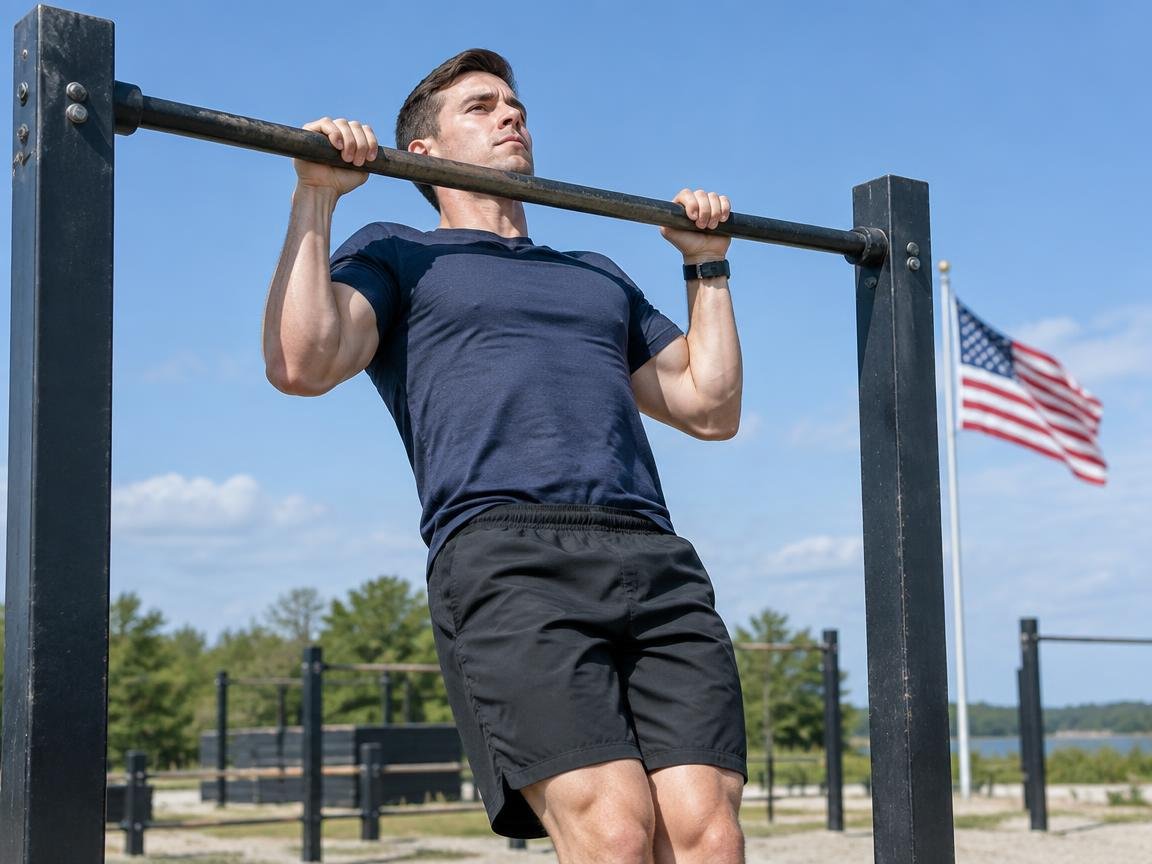
The physical demands of becoming a Navy SEAL are legendary, and for good reason. The Physical Screening Test (PST) is the initial gateway, a formidable challenge designed to filter candidates based on their raw physical capabilities. This test is not just about meeting minimums; it’s about demonstrating the potential for extreme endurance, strength, and mental toughness that will be pushed to their limits throughout the training pipeline. The PST assesses swimming endurance, upper-body strength, and cardiovascular conditioning, all crucial elements for operational readiness.
Mastering the Physical Screening Test Components
The PST consists of five distinct events, performed in a specific order with minimal rest between them. These events are designed to simulate the varied physical challenges SEALs face in the field.
- 500-Yard Swim: This event can be completed using either the breaststroke or sidestroke. Candidates are required to swim 500 yards in a pool. The minimum acceptable time is 12 minutes and 30 seconds. However, to be truly competitive and improve chances of selection, candidates should aim for a time of 9 minutes or less.
- Push-ups: After a short rest from the swim, candidates perform as many push-ups as possible in two minutes. The minimum standard is 42 repetitions. Competitive candidates consistently achieve 90 or more.
- Sit-ups: Immediately following push-ups, candidates perform as many sit-ups as possible in two minutes. The minimum is 50 repetitions, with competitive scores often exceeding 90.
- Pull-ups: Candidates then move to a pull-up bar, performing dead-hang pull-ups (no kipping or swinging). The minimum requirement is 6 repetitions. Highly competitive candidates can perform 18 or more.
- 1.5-Mile Run: The final event is a 1.5-mile run, completed in boots and long pants. The minimum acceptable time is 11 minutes. To stand out, candidates should strive for times under 9 minutes and 30 seconds.
Merely meeting the minimum standards is often not enough for selection, especially given the intense competition for a limited number of slots. Recruiters and Naval Special Warfare (NSW) mentors emphasize that candidates should aim for the “optimum” or “competitive” scores to significantly increase their chances of being chosen.
PST Component Minimum Standard Competitive Target 500-Yard Swim 12:30 9:00 Push-ups (2 min) 42 90 Sit-ups (2 min) 50 90 Pull-ups 6 18 1.5-Mile Run 11:00 9:30 These competitive targets reflect the caliber of individuals who typically succeed in the SEAL pipeline. Consistent, dedicated training that pushes beyond the minimums is essential for anyone serious about pursuing this elite path.
Navigating the Multi-Phase Special Warfare Pipeline
The journey to becoming a Navy SEAL is a multi-year, multi-phase process designed to systematically break down and rebuild individuals, forging them into elite special operations forces. The pipeline is characterized by relentless physical and mental challenges, high attrition rates, and continuous assessment.
The process typically begins with Naval Special Warfare Preparatory School, a five-week program that focuses on intense physical conditioning, swimming skills, and preparing candidates for the rigors ahead. This is followed by a two-week BUD/S Orientation, which introduces candidates to the Naval Special Warfare Center and provides a preview of the training.
The core of the initial training is Basic Underwater Demolition/SEAL (BUD/S) training, an approximately 24-week course divided into three demanding phases:
- Phase 1: Physical Conditioning (7 weeks): This phase is designed to push candidates to their physical and mental limits. It involves continuous running, swimming, calisthenics, and obstacle courses, all while operating in cold water and sand. The infamous “Hell Week” occurs during the fourth week of Phase 1. This grueling 5.5-day period involves continuous training with a maximum of four hours of sleep total, over 200 miles of running, and more than 20 hours of physical training per day. It’s a test of leadership, teamwork, and mental resilience, and a significant portion of candidates “Drop on Request” (DOR) during this time.
- Phase 2: Combat Diving (7 weeks): This phase focuses on developing candidates’ skills as combat swimmers. It involves extensive training in open-circuit and closed-circuit diving, underwater navigation, and long-distance subsurface swimming. Candidates must overcome claustrophobia and master complex diving techniques under stressful conditions.
- Phase 3: Land Warfare (7 weeks): The final phase of BUD/S shifts focus to land-based operations. Candidates learn small unit tactics, patrolling, demolitions, land navigation, and weapons proficiency. This phase culminates in a series of realistic combat scenarios designed to test their newly acquired skills under pressure.
Upon successful completion of BUD/S, candidates attend Parachute Jump School, a three-week course where they learn static-line and free-fall parachuting techniques. This is followed by SEAL Qualification Training (SQT), a 26-week advanced training program. SQT refines the skills learned in BUD/S and introduces more specialized techniques, including close-quarters combat, advanced demolitions, cold weather operations, and maritime interdiction. During SQT, many candidates also undergo the Special Operations Tactical Medic course, a six-month requirement that provides critical medical skills for prolonged field operations.
The attrition rates throughout this pipeline are notoriously high, underscoring the extreme difficulty and selectivity of the program. From initial enlistment to graduation from SQT, the overall success rate is approximately 9.5%. Looking at specific stages:
- Approximately 45% of candidates graduate recruit training.
- Roughly 41% complete SEAL pre-indoctrination.
- About 35% complete SEAL indoctrination.
- Around 11% complete BUD/S Phase 1.
- Approximately 10% complete BUD/S Phase 2.
- Only 10% of candidates successfully complete BUD/S Phase 3.
These statistics highlight that the vast majority of aspiring SEALs do not make it through the entire pipeline, reinforcing the elite nature of the force.
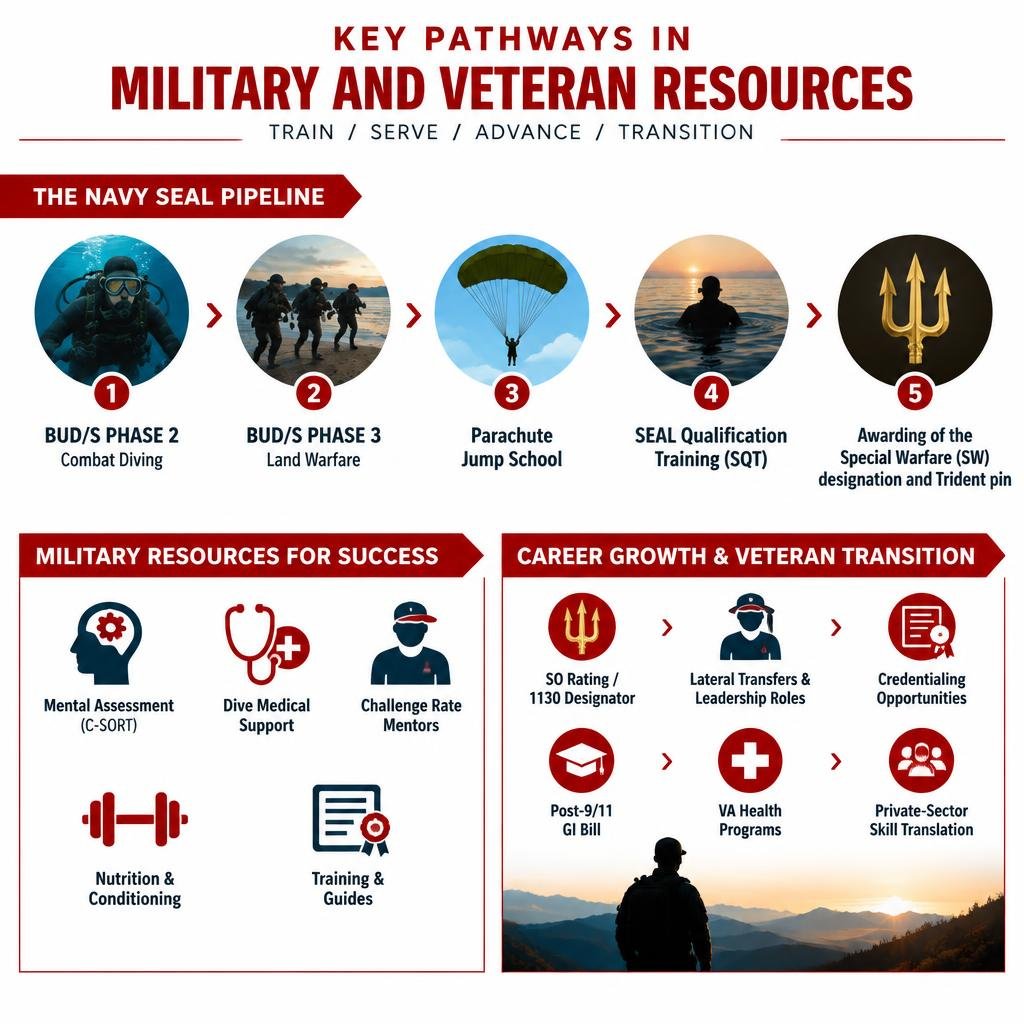
Here is a list of the major pipeline milestones from recruit training to Trident qualification:
- Recruit Training (Boot Camp)
- SEAL Pre-Indoctrination
- SEAL Indoctrination
- Naval Special Warfare Preparatory School
- BUD/S Orientation
- BUD/S Phase 1: Physical Conditioning (including Hell Week)
- BUD/S Phase 2: Combat Diving
- BUD/S Phase 3: Land Warfare
- Parachute Jump School
- SEAL Qualification Training (SQT)
- Awarding of the Special Warfare (SW) designation and Trident pin
Navigating Military and Veteran Resources for Career Progression and Transition
The journey through the Navy SEAL pipeline is just the beginning of a challenging and rewarding career. However, the military provides extensive resources not only for preparing for special warfare but also for career progression within the service and for a successful transition to civilian life. These resources are designed to support service members at every stage, from initial training to post-service opportunities.
Utilizing Military and Veteran Resources for Special Warfare Preparation
Beyond physical training, mental preparation and strategic resource utilization are critical for special warfare candidates. The Navy employs sophisticated tools and personnel to assess and develop the mental fortitude required for SEAL operations.
One such tool is the Computerized-Special Operations Resilience Test (C-SORT). This assessment helps evaluate a candidate’s mental toughness, resilience, and cognitive processing under stress, providing insights into their psychological suitability for the demanding environment of special operations. Understanding and preparing for this mental assessment is as crucial as physical conditioning.
Candidates will also interact with specialized personnel throughout their journey. Dive medical officers play a vital role, ensuring that all candidates meet the stringent medical requirements for combat diving, a core SEAL skill. Their approval is necessary for accession into Naval Special Warfare (NSW). Furthermore, the Physical Screening Test (PST) is ideally administered by challenge rate mentors, such as active-duty SEALs, EOD technicians, or Navy Divers, who can provide invaluable feedback and guidance from their own experiences. If these specialized personnel are unavailable, any E7 or above from another community can administer the PST, ensuring the integrity of the testing process.
Aspiring SEALs should also proactively seek out information on performance nutrition and operational conditioning programs. The Navy and various military support organizations offer guidance on optimizing physical performance and recovery, which is essential for enduring the intense training. For those seeking to delve deeper into the specific requirements and selection processes for special operations, there are many valuable guides available. Learning more about the intricacies of special operations selection can provide a significant advantage in preparation.
Career Transition and Continuing Military and Veteran Resources
Upon successful completion of the pipeline, individuals earn the coveted Special Warfare Operator (SO) rating for enlisted personnel or the 1130 Designator for officers, along with the iconic Trident insignia. For officers, further development includes the Junior Officer Training Course (JOTC) and continuous specialized training.
Even after qualifying, the military offers numerous avenues for career progression. This includes opportunities for lateral transfer into other specialized roles within NSW or advanced leadership positions. The Navy also supports credentialing opportunities, allowing SEALs to earn civilian certifications and licenses based on their military training and experience, which can be invaluable for future employment.
When the time comes to transition out of military service, the resources available to veterans are extensive. The Post-9/11 GI Bill provides significant educational benefits, covering tuition, housing, and books for college or vocational training. Veteran health programs through the Department of Veterans Affairs (VA) offer comprehensive medical care and mental health support. Furthermore, numerous programs and organizations focus on private-sector skill translation, helping veterans identify how their unique military skills and leadership experience can be applied to civilian careers. These resources are critical for ensuring that the extraordinary commitment made by SEALs is supported throughout their lives.
Frequently Asked Questions About Special Operations and Service Pathways
Aspiring Navy SEALs and those interested in special operations often have numerous questions about the rigorous requirements and pathways. Here, we address some of the most common inquiries to provide further clarity on service guidelines and candidate queries.
What are the minimum ASVAB and AFQT scores required for elite special operations programs?
For enlisted Navy SEAL candidates, specific ASVAB line scores are mandatory. As of October 2026, the primary requirement is a composite score of 170 from the General Science (GS), Mechanical Comprehension (MC), and Electronics Information (EI) sections. Alternatively, a composite score of 220 from Verbal Expression (VE), Mathematics Knowledge (MK), Mechanical Comprehension (MC), and Coding Speed (CS) is accepted. Additionally, candidates must achieve a VE + Arithmetic Reasoning (AR) score of 110, with a minimum MC score of 50.
Regarding the Armed Forces Qualification Test (AFQT), while the Navy’s general minimum for enlistment is 35, successful BUD/S candidates traditionally score 78 or higher. This indicates that while the absolute minimum AFQT score might allow entry into the Navy, a significantly higher score is often indicative of the cognitive abilities and academic aptitude prevalent among those who succeed in the demanding SEAL pipeline. Waivers for ASVAB line scores are exceptionally rare and typically only considered under extraordinary circumstances where a candidate demonstrates overwhelming qualifications in other areas.
Can women apply for special warfare pipelines like BUD/S?
Yes, women are fully eligible to apply for all special warfare pipelines, including BUD/S, as of December 2015. This policy change followed the repeal of the Combat Exclusion Policy, opening all military occupational specialties to qualified individuals regardless of gender.
It is crucial to understand that women must meet the exact same acceptance guidelines and undergo the identical training regimen as men. There are no modified physical standards or separate training tracks for women in the SEAL pipeline. As of 2021, while women have successfully completed the rigorous screening required to enter BUD/S, none had yet successfully completed the entire SEAL training pipeline. However, women have successfully completed the Special Warfare Combatant-craft Crewmen (SWCC) training, demonstrating the capability of female service members in other demanding special operations roles. The Navy continues to emphasize that selection is based solely on individual merit and the ability to meet the uncompromising standards.
What happens if a candidate fails to meet standards or drops on request?
The Navy SEAL pipeline is designed to be highly selective, and not every candidate will complete it. If a candidate fails to meet the rigorous physical or mental standards at any point during training, or if they decide to voluntarily withdraw, they are typically reassigned to other roles within the Navy.
The term “Drop on Request” (DOR) refers to a candidate voluntarily withdrawing from training. This can happen at any stage, often during the most physically or mentally demanding periods like Hell Week. Candidates who DOR are usually reassigned based on the needs of the Navy and their previous qualifications.
Other reasons for exiting the pipeline include a “medical roll” (due to injury or illness) or a “performance roll” (failing to meet specific performance benchmarks). In these cases, candidates are generally given the opportunity to heal or improve in other areas before being reassigned. Depending on the specific circumstances and the needs of the Navy, a candidate may be reassigned to a different rating (job) within the conventional Navy, or if they were already active duty, they would return to their previous command or be assigned a new one. While there might be waiting periods or specific criteria for re-application, candidates are generally not permitted to re-enter the SEAL pipeline if they have previously DOR’d or been dropped for performance reasons, though medical rolls may sometimes allow for re-entry after full recovery and re-evaluation. The Navy ensures that individuals who do not complete the SEAL pipeline still have valuable roles to play in the fleet.
Conclusion
The path to becoming a Navy SEAL is an extraordinary undertaking, characterized by an unwavering commitment, relentless physical preparation, and unparalleled mental resilience. From the initial core eligibility criteria and stringent ASVAB scores to the demanding Physical Screening Test and the multi-phase BUD/S and SQT pipeline, every step is designed to identify and forge individuals capable of operating at the highest levels of special operations.
As we’ve explored, success rates are low, emphasizing the elite nature of this force. However, for those who possess the requisite physical prowess, mental fortitude, and unwavering determination, the journey offers a chance to join a brotherhood of the world’s most capable warriors. Moreover, the military provides a robust framework of support, from specialized training resources to comprehensive programs for long-term career planning and seamless transition into civilian life. For anyone considering this challenging yet immensely rewarding career, understanding these requirements and leveraging available specialized support networks are the foundational steps toward achieving this ultimate aspiration.
