Key Takeaways:
- AI background generators are revolutionizing visual storytelling by enabling creators to produce immersive environments with ease.
- These tools democratize content creation, allowing individuals without extensive resources to craft compelling narratives.
- While AI offers significant advantages, maintaining authenticity and addressing ethical considerations remain crucial.
Visual storytelling stands as one of the most influential ways to engage audiences, conveying messages, moods, and narratives through carefully crafted imagery. The arrival of artificial intelligence (AI) is reshaping this creative landscape, introducing new possibilities and efficiencies for creators at every level. Among these advancements, an AI photo background has emerged as a standout innovation, offering a quick, intuitive solution for generating immersive backgrounds that previously required extensive manual effort and resources.
With AI-powered tools, even creators with limited technical knowledge or budget can bring their visions to life, fueling creativity and expanding access to visual storytelling. The ease of generating customizable backgrounds also unlocks new opportunities for experimentation, streamlining workflows across industries from advertising to filmmaking.
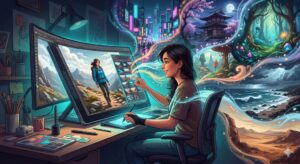
The Rise of AI in Visual Storytelling
Over the past few years, AI technologies have quietly become an integral part of the content creation process. From streamlining editing pipelines to generating stunning graphics, AI is now a staple in both professional and user-driven storytelling. AI background generators use advanced algorithms to generate visually appealing, context-appropriate environments from simple prompts, allowing creators to focus on core story elements.
This technology empowers users to visually prototype ideas, collaborate remotely, and respond to rapidly changing creative trends. It helps reduce dependence on large production teams and gives rise to a new generation of solo artists, small businesses, and digital influencers able to compete with established media organizations. As seen on emerging platforms, AI-driven visuals can also adapt to the latest social media and interactive content formats.
Democratizing Content Creation
Traditionally, producing high-quality visual content required significant investment, specialized skills, and access to advanced design software. With AI background generators, anyone can create visually stunning environments in just a few clicks. Popular social platforms like TikTok have introduced in-app generators, allowing creators to produce engaging video backgrounds without formal graphic design training. This shift opens the door to a diverse array of storytellers, reducing barriers and fostering inclusivity within creative industries. For example, users can prompt simple descriptions and instantly receive eye-catching, custom settings tailored to their needs.
These advances echo across the digital landscape and are especially meaningful for educators, small businesses, and aspiring artists who want to tell their stories visually but may not have access to costly creative resources. As the technology matures, AI-based tools promise to further bridge the gap between imagination and production quality. This transformation nurtures the rise of independent content creators who can now reach global audiences with professional-grade visuals.
Enhancing Creative Processes
One of the standout advantages of AI background generators is their impact on the creative process. These tools enable rapid prototyping and seamless iteration, enabling creators to test a range of artistic choices with speed and confidence. For industries such as filmmaking and digital media, this means scenes can be pre-visualized before production even begins. The result is substantial savings in both time and resources, coupled with increased creative freedom. Filmmaker Kévin Mendiboure’s use of AI technologies to realize a previously impossible sci-fi project illustrates how these tools can break down traditional barriers and make high-concept ideas achievable without blockbuster budgets.
Challenges and Considerations
Despite their advantages, AI background generators introduce new challenges for creators. Ensuring that AI-generated visuals maintain emotional authenticity is a primary concern. There is also the ethical issue of sourcing and style replication, as AI tools can inadvertently mimic or appropriate existing artwork. As highlighted in the Bionic Awards insights, striking a balance between leveraging AI and respecting traditional artistic disciplines is integral for maintaining quality and originality in modern storytelling. Furthermore, copyright regulations and the need for transparent usage policies continue to evolve in response to these rapid technological shifts.
Future Prospects
The future of AI-based background generation holds great promise. As algorithms grow more sophisticated, creators can expect finer control over details such as style, lighting, and composition. Better integration with editing suites and creative software will likely further reduce friction in multi-step workflows, making AI an even more valuable collaborator for seasoned professionals and hobbyists alike. Continued advances in neural networks and machine learning will empower AI to anticipate user needs and deliver contextually relevant recommendations, ushering in an era of hyper-personalized visual storytelling that adapts to each creator’s unique voice.
Conclusion
AI background generators are rapidly changing the face of visual storytelling, making high-quality content creation accessible to a broader audience. These tools offer significant benefits in terms of speed, flexibility, and creative empowerment, while also introducing important questions about artistic integrity and ethical design. As creators navigate this new landscape, thoughtful adoption and a commitment to responsible innovation will ensure that AI serves as an enhancement rather than a replacement for human creativity. The next chapter of visual storytelling will be defined by the synergy between authentic, human-driven ideas and the generative power of AI.
